Blue Bay Beach — Marine Park, Snorkelling and Photography
Last updated: June 2026 · By Bilaal Sadeer
Blue Bay is not simply the most beautiful beach in Mauritius's south-east — it is one of the most ecologically important marine parks in the entire Indian Ocean. A RAMSAR-listed protected area covering 353 hectares of living coral reef, it holds 50 coral species, 72 fish species, hawksbill turtles and manta rays in water clear enough to see the bottom at 50 metres. From this beach, a 10-minute boat ride takes you to Ile aux Deux Cocos — a private island that looks entirely untouched. I have photographed couples, honeymooners and families here for over 15 years. This guide covers everything: the marine park, snorkelling, the island trip, photography positions and how to combine Blue Bay with nearby Mahebourg for a full south-east day.
Blue Bay Beach & Marine Park — Key Facts
- RAMSAR-listed Marine Park (2008) — 353 hectares of protected coral reef, one of the Indian Ocean's most important marine reserves.
- Best snorkelling in Mauritius — 50m+ visibility, 50 coral species, 72 fish species, hawksbill turtles and rays.
- Glass-bottom boat tours — €15–25 per person; guides know exactly where the turtles are on any given morning.
- Ile aux Deux Cocos — private island 2km offshore, operated by Beachcomber; half-day boat trips from Pointe d'Esny.
- Location — 5 minutes from Mahebourg, 15 minutes from Sir Seewoosagur Ramgoolam International Airport.
- Public beach — white sand, calm sheltered lagoon, free public access year-round.
Why Blue Bay Is Different
Mauritius has no shortage of beautiful beaches. The island's entire coastline is fringed by a barrier reef, and most of the major resort beaches — Belle Mare, Flic en Flac, Le Morne — offer postcard-quality lagoons with calm, clear water. What they rarely offer is the ecology that sits beneath that water. The coral reefs around most of Mauritius's resort beaches have been degraded by decades of boat anchoring, tourist pressure and periodic bleaching events. The water looks beautiful. The underwater world, in many places, does not.
Blue Bay is different because it is formally protected. The RAMSAR designation — awarded in 2008 under the Ramsar Convention on Wetlands, an international environmental treaty — gave the marine park legal protection that prevents anchoring, fishing, coral touching and any extractive activity within the reserve boundary. The result, two decades later, is a reef that still functions as a genuine ecosystem: coral formations in excellent health, fish populations that have not been depleted by line fishing, and turtles that have habituated to humans because no one has ever threatened them here.
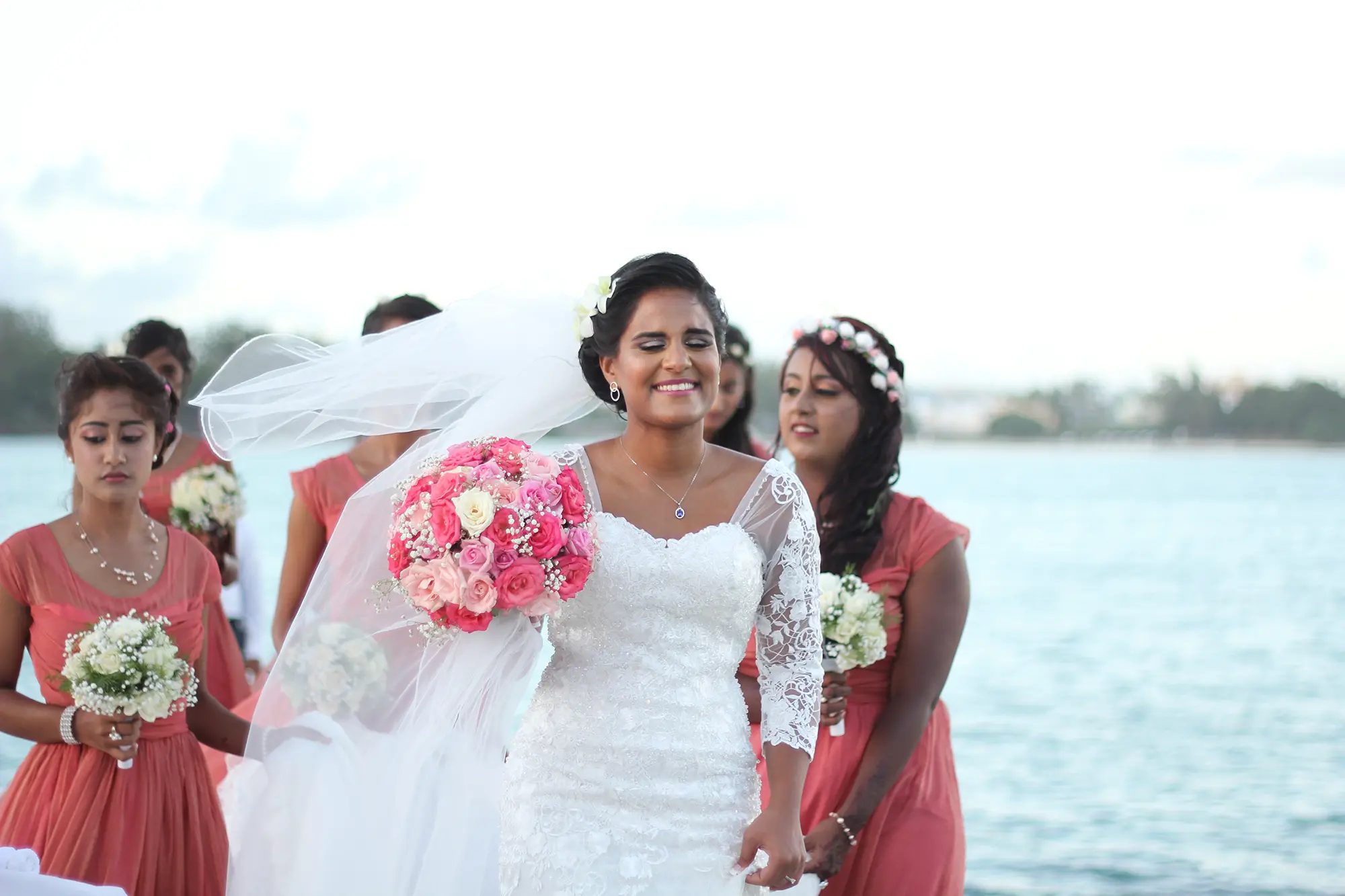
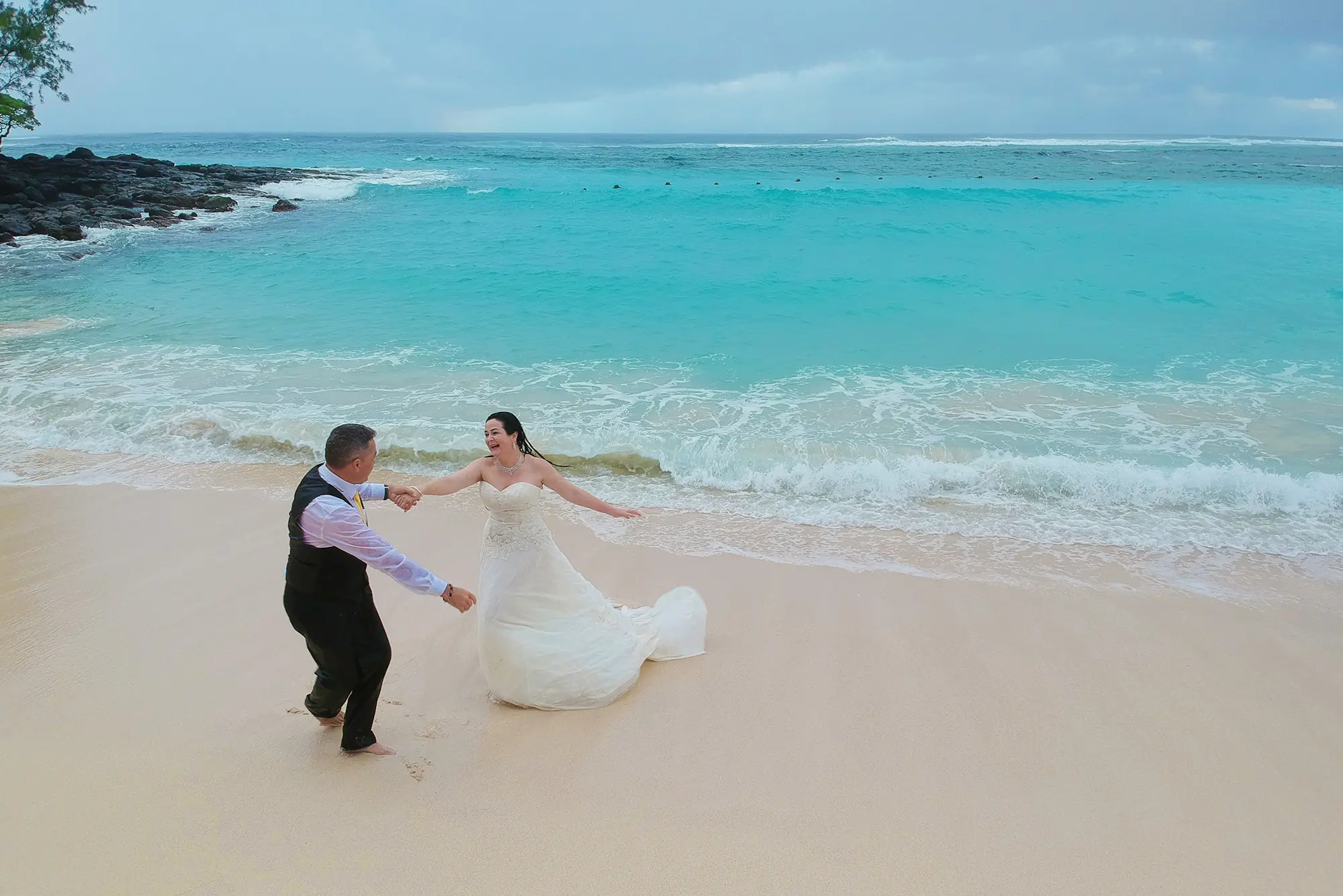
Standing on the beach at Blue Bay and looking out at the water, you see a colour gradient that is genuinely extraordinary: the white sand near shore creates a band of pale turquoise, deepening through jade and emerald to a dense cobalt blue over the deeper coral formations, then navy towards the outer reef. It is this gradient — and the clarity that makes it possible — that distinguishes Blue Bay visually as well as ecologically.
The Blue Bay Marine Park
The Blue Bay Marine Park was gazetted as a Marine Protected Area by the Mauritian government and simultaneously designated as a Wetland of International Importance under the Ramsar Convention in 2008. The protected area covers 353 hectares of shallow reef, seagrass beds and open lagoon between the coastline and the outer barrier reef. It is one of only a handful of RAMSAR sites in the Mascarene Islands and one of the most biodiverse coral reef systems in the western Indian Ocean.
What the Marine Park protects
Surveys of the Blue Bay Marine Park have recorded 50 species of coral, including both hard corals (Acropora table corals, brain corals, massive Porites) and soft corals, in formations that rise up to 3 metres from the sandy bottom. Seventy-two species of reef fish have been recorded, including parrotfish, surgeonfish, grouper, butterfly fish and various species of snapper and wrasse. Hawksbill turtles (Eretmochelys imbricata) — a globally vulnerable species — are resident in the park and can be reliably observed by snorkellers on most mornings. Manta rays and eagle rays are occasional visitors, most commonly seen between November and April.
What you cannot do
The marine park rules are strictly enforced. No anchoring is permitted within the reserve — all boat operators must use permanent moorings. No fishing or spearfishing. No coral touching, breaking or collection. No littering. These rules are what have kept the reef in the condition it is in; respecting them is the reason future visitors will be able to experience the same thing you are experiencing today.
The diversity you will see
The 50 coral species range from shallow-water Acropora tables — which look like submerged dinner plates up to a metre across, covered in electric-blue and green tips — to the massive dome-shaped brain corals that can be hundreds of years old. The fish life around healthy coral formations is constant: clouds of smaller reef fish scatter as you approach, parrotfish crunch through coral, and the hawksbill turtles — typically 60–90cm long and utterly unconcerned by snorkellers — cruise the mid-water column grazing on seagrass. On a good morning at Blue Bay, you will see more marine life in one hour than you might see in a week of snorkelling at a typical resort beach elsewhere on the island.
Snorkelling at Blue Bay
There are two ways to snorkel at Blue Bay: independently from the beach, or on a guided glass-bottom boat tour. Both are excellent; the choice depends on your experience level and what you want to see.
Glass-bottom boat tour (recommended)
The glass-bottom boat tours operate from the main pier at the northern end of Blue Bay beach. The boats — traditional wooden pirogues fitted with transparent panels in the hull — take groups of 6–12 people out to the best coral formations within the marine park, where snorkellers can enter the water directly above the reef. The guides know exactly where the hawksbill turtles feed on any given morning, which formations have the highest fish density, and where the best coral gardens are located. Tours typically last 90 minutes and cost €15–25 per person depending on the operator. This is the recommended option for first-time visitors, for families with children, and for anyone who wants to maximise the likelihood of seeing turtles.
Self-guided snorkelling from the beach
The marine park begins approximately 100 metres offshore from the beach. Confident swimmers can snorkel out from the shore and reach the coral formations without a boat. The approach from the beach takes you through shallow sandy areas (1–2 metres) before the bottom drops away and the coral begins. The main coral formations lie in 3–6 metres of water. Snorkelling equipment — masks, fins and snorkels — can be rented from operators on the beach for a nominal fee. Entry is free.
Best time to snorkel
Morning — between 8am and 11am — gives the clearest water, fewest boat wakes, and the most active marine life at Blue Bay. Turtles feed most actively in the early morning. The glass-bottom boats begin operating from around 9am. By early afternoon the water visibility is still excellent but boat traffic increases and the midday sun creates a harsher light overhead (which matters for underwater photography). October to April brings warmer water (26–29°C); June to September brings cooler water (22–24°C) and, if anything, even greater clarity due to reduced plankton blooms.
Ile aux Deux Cocos
Two kilometres offshore from Pointe d'Esny — the residential point immediately north of Blue Bay — lies Ile aux Deux Cocos, a small private island owned and operated by Beachcomber Hotels. The island is accessible only by boat; Beachcomber runs half-day excursions from the Pointe d'Esny jetty that include the boat transfer, a barbecue lunch, access to the beach and snorkelling equipment. Day visitors not staying at a Beachcomber property can book through the hotel or via tour operators in Mahebourg.
The island itself
Ile aux Deux Cocos is small enough to walk around in ten minutes but feels entirely removed from the mainland. The beach is fine white sand shelving gently into a shallow lagoon of extraordinary clarity — the coral is visible in 1–2 metres of water directly from the beach, making it ideal for casual snorkellers and children. A colonial-era pavilion on the island is used for lunch service. The vegetation is dense casuarina and coconut palms. Because access is controlled and numbers are limited, the beach never feels crowded — on most days you will share it with fewer than 30 people.
Photography on Ile aux Deux Cocos
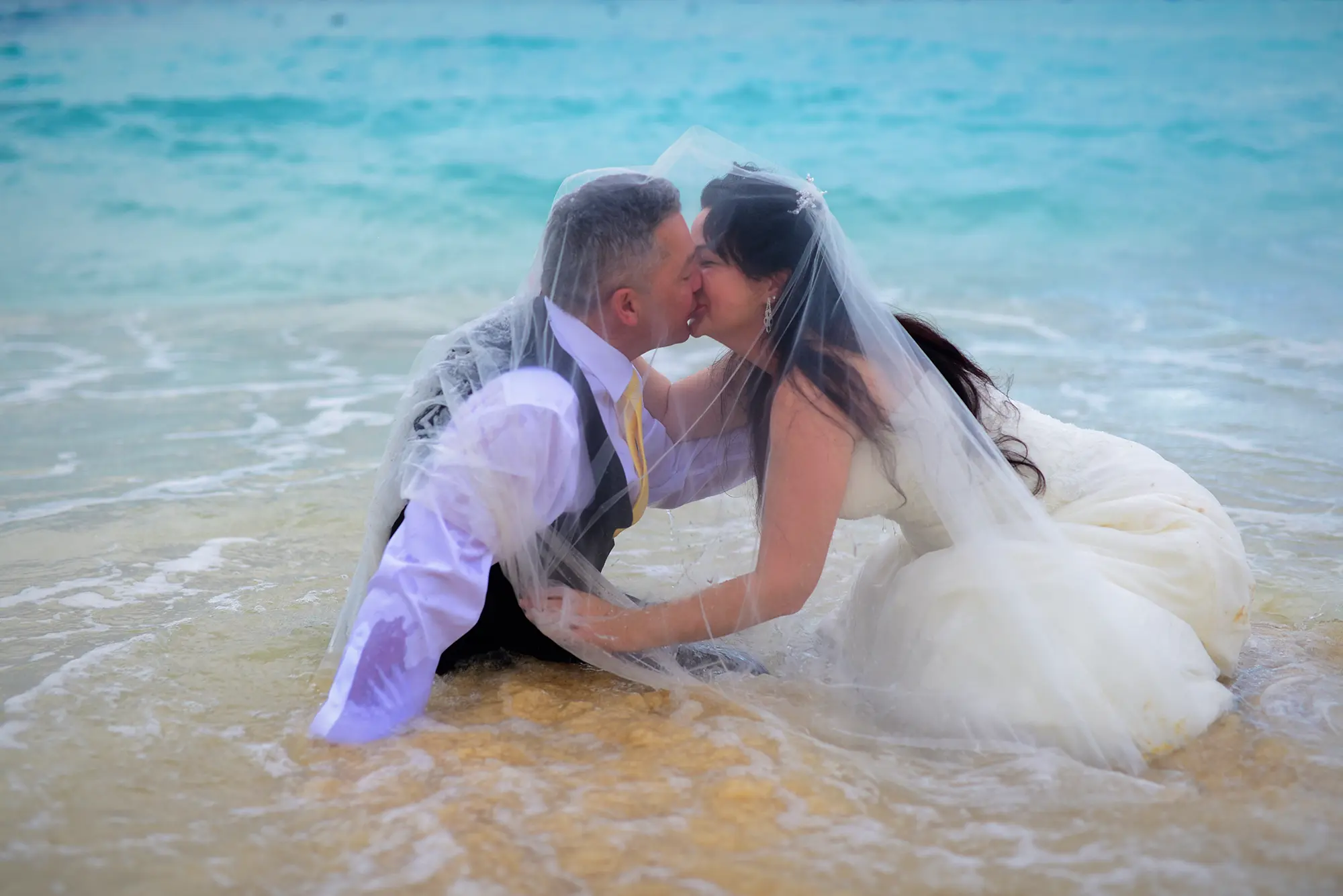
The island is one of the best photography locations in south-east Mauritius. The combination of controlled access (no day-trippers landing at random), pristine beach, calm water and the visual backdrop of the Mahebourg lagoon creates a setting that looks genuinely deserted even when it is not. For couple and honeymoon photography, the island offers three distinct visual environments: the white sand beach with the turquoise lagoon, the colonial pavilion with dappled shade and warm light, and the coral shallows for in-water portraits. Drone photography from above the island reveals the colour gradient of the surrounding reef in extraordinary detail. If you are planning photography here, book the first boat departure (usually 9am) — you will have the beach largely to yourselves for the first two hours before the lunch group arrives.
Photography at Blue Bay
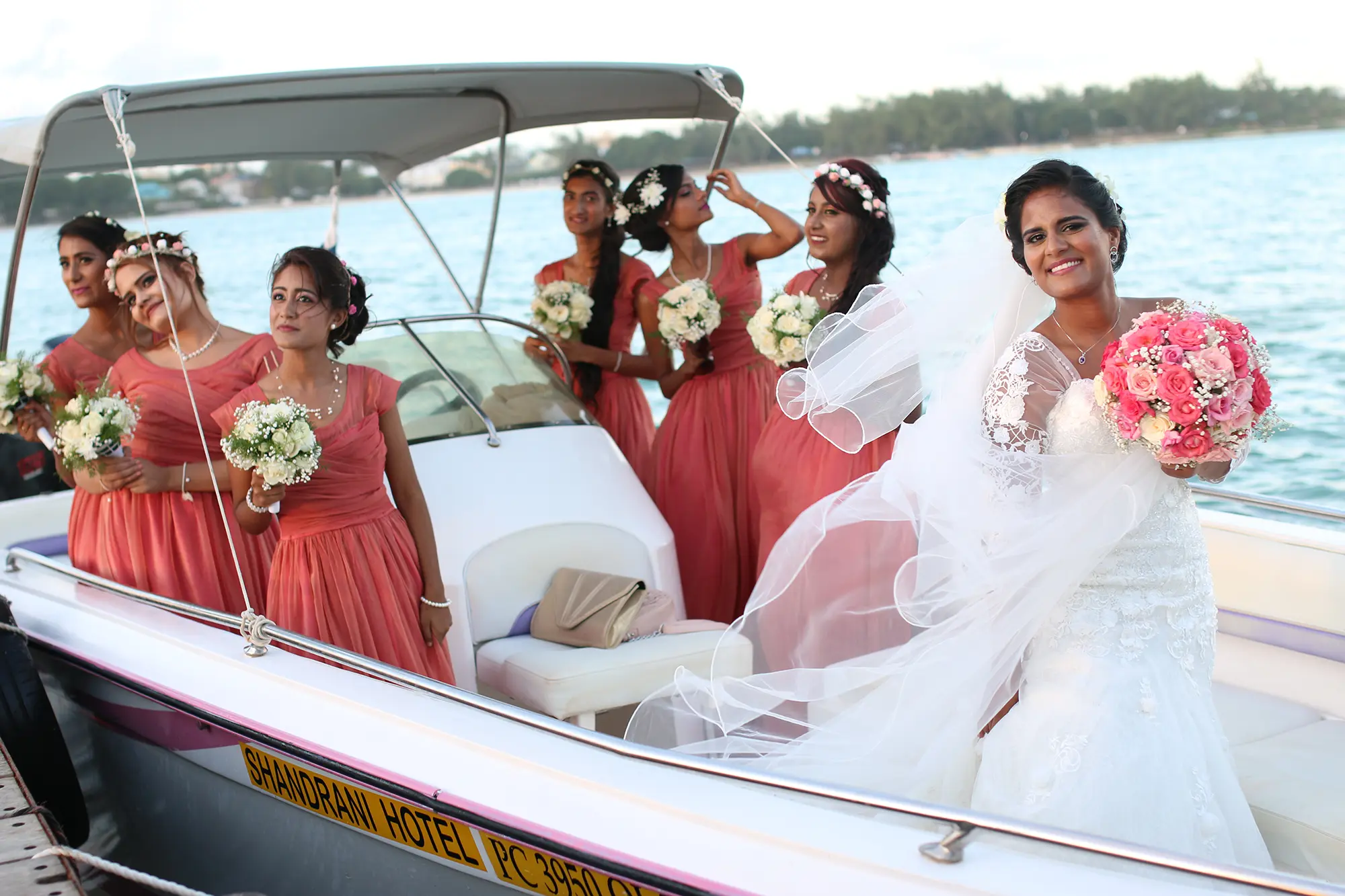
Blue Bay is one of the most photographically rewarding locations in Mauritius — not because it is the most dramatic (Le Morne has that title) but because it offers a range of completely different visual environments within a very small area: the beach, the pier, the marine park colours from above, the island, and the waterfront town of Mahebourg nearby. Here are the four positions I use most often.
Position 1: The Blue Bay pier, looking south towards Ile aux Deux Cocos
The public pier at the northern end of Blue Bay beach is one of the best camera positions on the south-east coast. Standing at the end of the pier and shooting south, you have the turquoise lagoon in the foreground, the boats moored along the pier edge creating leading lines, and the silhouette of Ile aux Deux Cocos on the horizon. In morning light this is a pale gold and blue scene; at golden hour it becomes amber and copper. For couple portraits on the pier, the open water background and the distance from the beach crowd creates a clean, editorial image.
Position 2: Glass-bottom boat for underwater shots through the glass
The glass panels in the hull of the boat create a natural framing device. Shooting through the glass with a wide-angle lens, the coral formations and fish are rendered sharp while the boat's wooden frame gives the image context. This works best in morning light when the sun is at a low angle and penetrates the water clearly. A polarising filter is useful to reduce surface reflections on the glass. I often use this position for images that show the reef in the context of the boat — giving a sense of the experience rather than purely the underwater world.
Position 3: Drone from 40 metres over the marine park
The colour gradient of the Blue Bay Marine Park is only fully visible from above. From 40 metres, the drone captures the complete transition from pale sand (white) through shallow turquoise, mid-range emerald, deep jade and finally navy blue as the water depth increases over the outer coral formations. The reef structures are clearly visible as darker shapes within the lighter lagoon. For couple photography, the drone provides the establishing shot that shows the scale of the setting — two tiny figures on the pier or beach against a vast, extraordinary colour field. All Bilaal Sadeer packages include drone coverage where permitted.
Position 4: Couple portraits on the public beach in afternoon light
The public beach at Blue Bay faces east, which means it receives morning light directly and afternoon shade — which is often better for portraits than direct afternoon sun. However, walking to the western end of the beach (a 10-minute walk from the main entrance, past the fishing pirogue area) takes you to a stretch that faces more south-west and picks up late afternoon light beautifully. The beach here is less developed, the sand is cleaner, and the light in the last two hours before sunset creates warm, low-contrast illumination ideal for couple and honeymoon portraits. Combine this with a short boat trip to Ile aux Deux Cocos for a full south-east half-day photography session.
Mahebourg Waterfront
Mahebourg is a small town 5–10 minutes north of Blue Bay that is, in my view, one of the most undervisited places in Mauritius. It lacks the polished infrastructure of Grand Baie or Flic en Flac, and that is exactly what makes it worth visiting — it is a functioning Mauritian coastal town, not a resort strip.
The waterfront promenade
The Mahebourg waterfront promenade runs along the edge of the lagoon for about a kilometre, lined with fishing boats, a few café terraces and benches overlooking the water towards Ile aux Aigrettes (another small island reserve). The light on the water here in the morning is outstanding for photography — the shallow lagoon creates a mirror effect in calm conditions that reflects the sky and the boats in perfect symmetry. A 7am walk along the promenade with a camera will produce images that are entirely unlike anything from the resort beaches further north.
The Monday market
Mahebourg holds a weekly market on Monday mornings in the covered market building behind the waterfront. It is a genuine local market — vegetables, spices, fresh fish from the overnight catch, Mauritian street food (dholl puri, gato piment, samosas), and a small craft section. For photography, the market is a documentary goldmine: the colours of the produce, the faces of the vendors, the morning light cutting through the market roof. Arrive by 7:30am for the best light and the most activity; most vendors are packing up by 11am.
The Naval Museum
The National History Museum of Mahebourg (commonly called the Naval Museum) is housed in a colonial mansion overlooking the lagoon. It documents the 1810 Battle of Grand Port — the only naval battle fought during the Napoleonic era in which France defeated Britain — with original artefacts recovered from the seabed. For visitors interested in Mauritius's colonial history, it is worth an hour. For photographers, the colonial building itself — white-painted stone, shuttered windows, surrounded by gardens — is an interesting subject in the right light.
Where to eat
La Bonne Marmite, on the waterfront road, serves traditional Mauritian curry and rice — specifically the kind of daube, rougaille and dhall that you will not find at a resort. Lunch here after a morning at Blue Bay is one of my standard recommendations for visitors who want to understand Mauritius as a place rather than simply as a backdrop.
Getting to Blue Bay
Blue Bay's single most significant practical advantage is its proximity to the airport. Sir Seewoosagur Ramgoolam International Airport is 15 minutes by car from Blue Bay beach — making it the closest major beach to the airport on the island. This has significant implications for itinerary planning.
From the airport
The drive from the airport to Blue Bay takes approximately 15 minutes on the A10 coastal road. Taxis from the airport to Blue Bay cost approximately MUR 500–700 (€10–14). Car hire from the airport is available from all major operators and is the recommended option if you plan to explore the south and south-west coast independently. Blue Bay works perfectly as a first-day destination after an early morning arrival — you can be in the water within 30 minutes of clearing customs.
From elsewhere on the island
From Grand Baie (north): approximately 1.5 hours by car via the M2 motorway and the A10. From Le Morne (south-west): approximately 45 minutes via the A9 coastal road. From Port Louis (capital): approximately 50 minutes via the M2. From Belle Mare (east coast): approximately 45 minutes. All routes are straightforward; signposting for Blue Bay is good from the main roads.
Parking
There is a free public car park adjacent to the main beach entrance at Blue Bay. It is large and rarely full except on public holidays and Sunday afternoons when local families use the beach. Arrive before 9am to secure a space easily and to catch the morning light before the beach fills.
Recommended itinerary position
Blue Bay works best on Days 1–2 (airport arrival day and the following morning for snorkelling and Ile aux Deux Cocos), then moving west to Le Morne for Days 3–5. Alternatively, position Blue Bay and Mahebourg as a dedicated south-east day from a central base (such as Beau Champ or Trou d'Eau Douce on the east coast). It combines naturally with a full day at Le Morne or Bel Ombre for a southern Mauritius circuit.
Blue Bay Beach Mauritius — FAQ
Capture Your Mauritius Memories
Drone aerials. Golden-hour portraits. The turquoise lagoon as your backdrop. 15 years shooting Mauritius's most beautiful beaches.