Belle Mare Beach, Mauritius
Last updated: June 2026 · By Bilaal Sadeer
Belle Mare is Mauritius's east coast jewel — a long crescent of powdered white sand edged by a barrier reef that turns the lagoon into a mirror of impossible turquoise. Protected from the prevailing south-east trade winds, the water here is flat when beaches on the west coast are choppy, and the sunrise — the sun rising directly out of the open Indian Ocean in front of you — is arguably the finest photography light on the island. I have been shooting at Belle Mare for 15 years: couples, weddings, honeymoons, aerials. This is the complete guide to the beach, the light, the hotels, and how to photograph it.
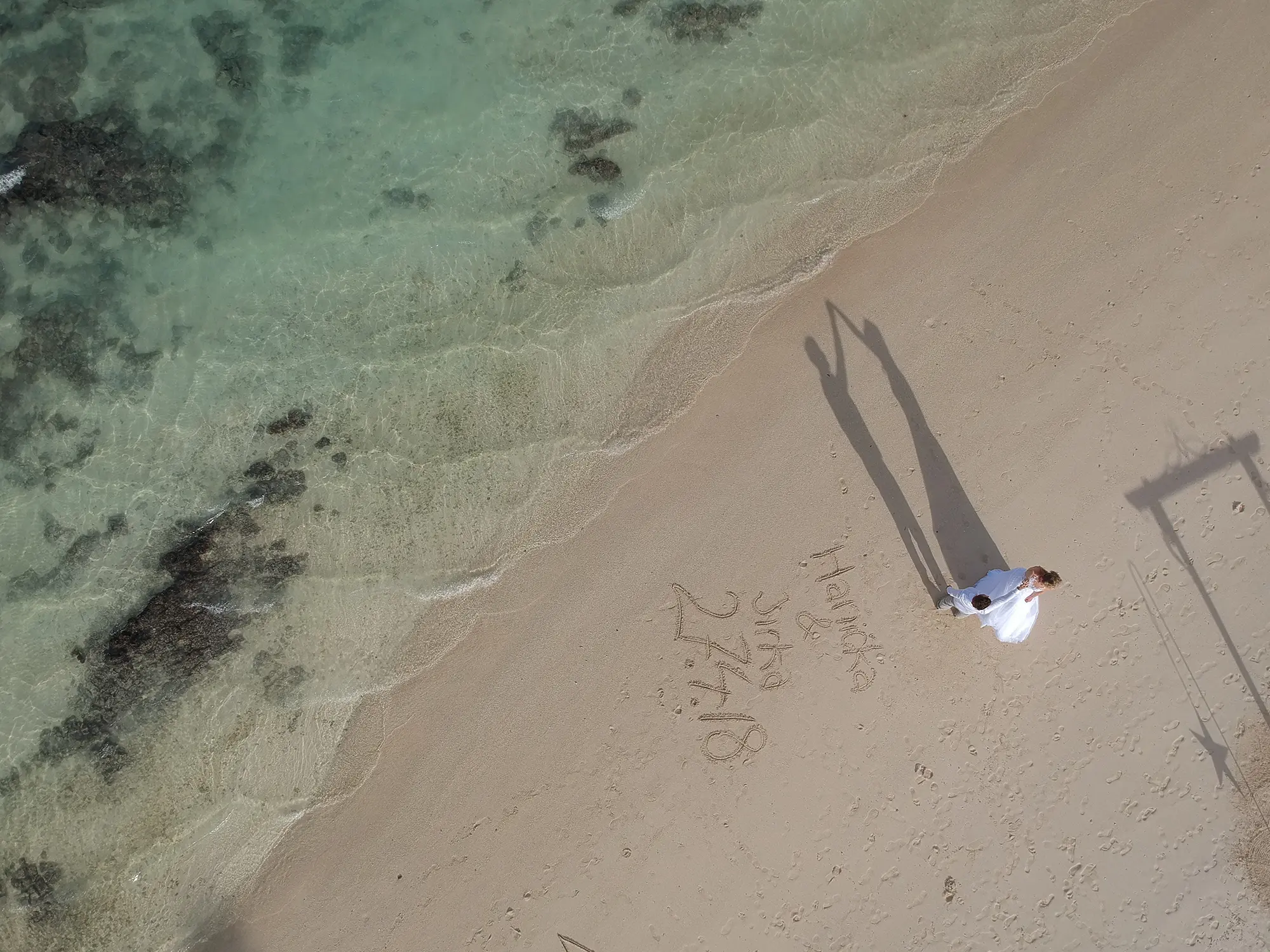
Belle Mare Beach — Key Facts
- East coast location — approximately 45 minutes from SSR International Airport.
- Reef-protected lagoon — glassy calm conditions even during trade wind season when other coasts are choppy.
- Water temperature — 24–28°C year-round; comfortable swimming in every season.
- Best photography window — 5:30–8:00am sunrise; the most spectacular golden light on the island.
- Luxury hotels — Constance Belle Mare Plage, Shangri-La Le Touessrok, One&Only Le Saint Géran.
- Public beach access — Belle Mare public park with free parking; no hotel booking required.
Why Belle Mare Is Different
There are beautiful beaches all around Mauritius — on the west coast at Flic en Flac, on the south-west at Le Morne, on the north at Mont Choisy. But Belle Mare is genuinely different, and the difference comes down to physics and geography working together in a way that happens at very few places on earth.
The barrier reef at Belle Mare runs almost parallel to the shoreline at a distance of roughly 800 metres to 1.2 kilometres. That distance and alignment is close enough to break all ocean swell completely, but far enough to allow full tidal circulation inside the lagoon — which means the water stays clean, oxygenated, and an extraordinary shade of turquoise rather than the murky green of enclosed lagoons. The result is a natural flat-water pool the size of several football pitches that reflects the sky like a mirror. In the early morning, before any wind arrives, the lagoon surface has the quality of polished glass.
The east coast orientation matters enormously for photography. Unlike the west-facing beaches at Flic en Flac or Le Morne, where the best light comes at sunset, Belle Mare faces the open Indian Ocean to the east. The sun rises directly in front of you — out of the water, above the horizon line, with no land mass to obstruct or soften it. This means the first light of the day hits the beach straight on rather than raking in from the side, and for the forty minutes between first light and full sunrise, the lagoon is illuminated from below as much as from above — a pink and gold mirror effect that is impossible to reproduce with any artificial light and that disappears completely once the sun clears the horizon and the day begins in earnest.
The east coast also sits in the lee of the island's central mountain range during the south-east trade wind season (roughly May to October). The mountains strip much of the moisture and force from the trade winds before they reach the east coast, which means Belle Mare is often calm on mornings when the north and west coasts are breezy. This makes the mirror-lagoon effect available more consistently than at comparable east-facing beaches on other islands in the Indian Ocean.
The Beach in Detail
Belle Mare beach runs for approximately four kilometres along the east coast, broken only by the small rocky headlands that separate the hotel stretches from the public beach. The full length is accessible on foot along the shoreline, and the character of the sand and water varies noticeably along that distance.
Sand Quality
The sand at Belle Mare is powdered coral — fine-grained, bright white, and cool underfoot even in full afternoon sun because its white surface reflects heat rather than absorbing it. This is not the coarser volcanic sand found at some Indian Ocean beaches, nor the compressed sand of beaches formed by wave erosion. The texture is closer to talc than to conventional beach sand, and it photographs brilliantly: the contrast between the white sand and the turquoise water is among the strongest colour contrasts in natural landscape photography.
The dry, upper portion of the beach is shaded by a line of casuarina pines (filaos) along most of its length, which provides natural shade from midday onwards and gives the beach a layered visual quality — the dark green of the trees, the white sand, the pale turquoise of the shallows, the deeper blue of the mid-lagoon and the dark navy of the reef edge and open ocean beyond.
Lagoon Depth and Water Colour
The lagoon at Belle Mare graduates from almost nothing at the waterline to approximately 4 metres at the deepest points near the reef. The visual effect of this graduation is one of the beach's most distinctive features: the water moves from near-invisible at ankle depth, through a pale mint at 30–40cm, to a vivid medium turquoise at 1–2 metres, to a deep teal-blue at 3–4 metres. Seen from the beach or from the air, these colour bands are stacked in distinct horizontal layers — white, mint, turquoise, teal, navy — a colour palette that appears in virtually every photograph taken at Belle Mare and that no filter can replicate from a naturally murkier beach.
Swimming and Snorkelling
The flat-water conditions make Belle Mare one of the safest swimming beaches on the island. There are no rip currents within the lagoon under normal conditions, and the gradual depth graduation means wading is easy even for children. Sea turtles visit the lagoon regularly — particularly in the early morning before the beach fills with swimmers. Green turtles are more common; hawksbills are occasionally sighted. Reef fish are visible in the shallower sections closer to the reef; eagle rays and small blacktip reef sharks have been recorded near the reef wall, though they pose no threat to swimmers.
The water temperature ranges from 24°C in the austral winter months (July–August) to 28°C in summer (December–February). This range is narrow enough that a wetsuit is never necessary, and the water remains genuinely inviting even in the cooler months.
Sunrise Photography at Belle Mare
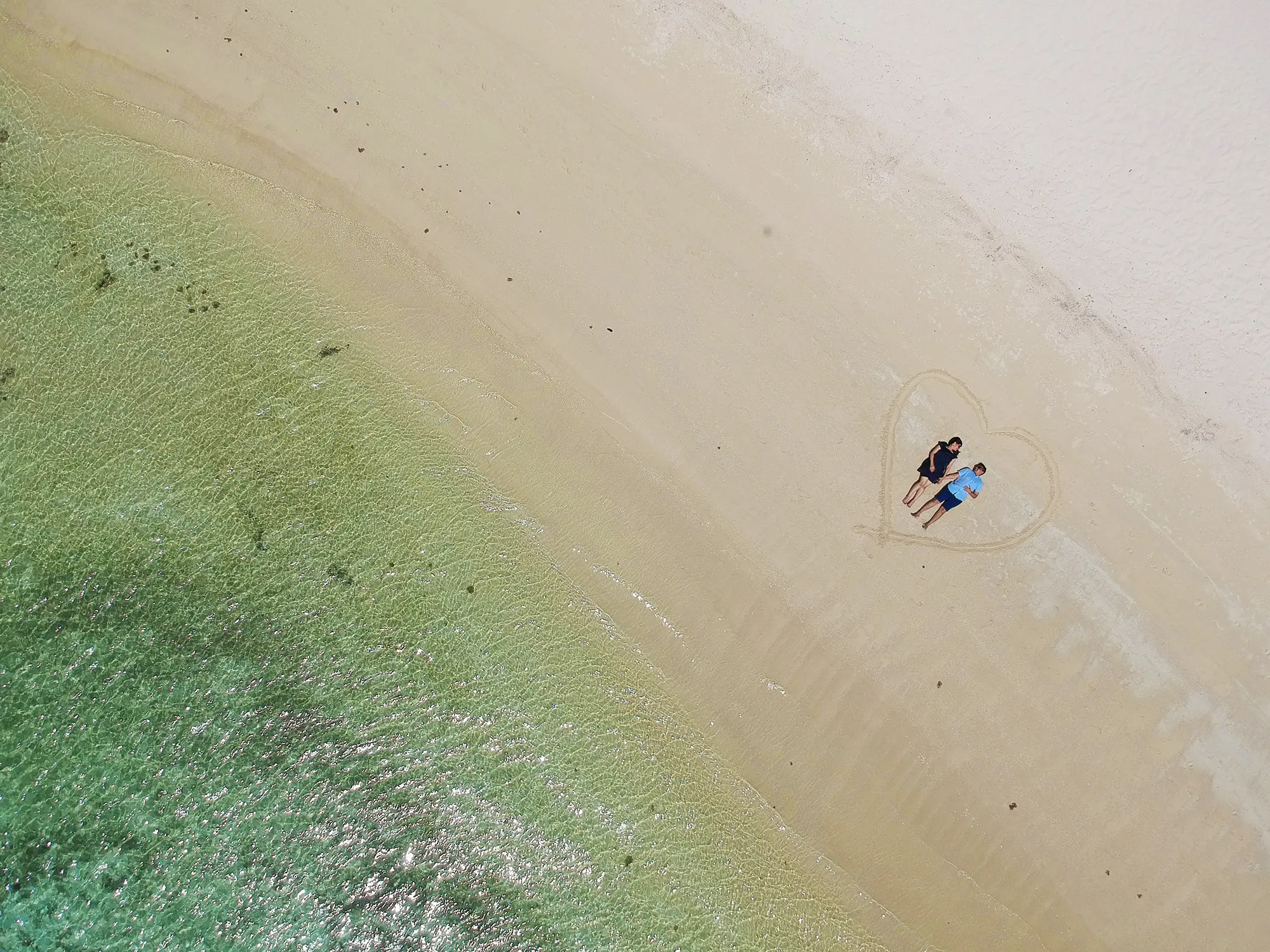
If I had to choose one single photography session across all of Mauritius — one time, one place — it would be Belle Mare at sunrise. Not the north coast at golden hour. Not Le Morne at sunset. Belle Mare, 5:30am, with the sky still dark pink at the horizon and the lagoon holding a perfect reflection of it. Nothing else on the island competes with what happens here in the first forty minutes of the day.
Timing and Logistics
Arrive at the public beach park by 5:30am. In June, this is roughly 35 minutes before sunrise. In December, it is closer to 25 minutes before — the sun rises earlier and faster in summer, so the window is tighter. Parking at the public beach park is free and the car park is usually empty at this hour. Walk north along the beach to position yourself away from the public area and toward the stretch in front of the casuarina tree line, where the sand is most undisturbed.
Positions on the Beach
There are three distinct positions that produce different results. First: at the water's edge facing directly east, standing in 2–3cm of water on the wet sand. At this position you have the full eastern horizon in front of you and the wet sand immediately at your feet will act as a reflective surface — any subject placed here will have a mirror reflection below them in the sand as well as the sky reflection in the lagoon behind. Second: slightly elevated, at the crest where the dry sand meets the wet, looking south along the beach with the sun rising over your left shoulder. This gives you the full length of the beach in the frame with the lit water beyond. Third: wading to ankle depth in the lagoon itself, shooting back toward the beach from a low angle — this gives you the full lagoon in the foreground with the beach and casuarinas as a mid-ground and the pink sky as a backdrop.
The Glass-Effect Technique
The mirror or glass effect that makes Belle Mare sunrise images distinctive comes from a combination of conditions and technique. The conditions: flat water, no wind, and the sun rising at a low angle directly toward you. The technique: shoot as low as possible — ideally with the camera at 30–40cm above the waterline or the wet sand surface. At this height the reflection in the wet sand or in the still lagoon becomes visible in the lower third of the frame, and the subject (a couple, a person, or simply the landscape) appears to float above a double sky. A wide aperture (f/2.8 or wider) at this low angle also slightly softens the reflection, reinforcing the dream-like quality.
The light moves through three distinct phases in those forty minutes. Phase one (5:30–5:50am): the sky is a deep rose-pink, the lagoon is steel-grey with pink reflections, and the sun has not yet appeared. This is the most atmospheric phase for landscapes. Phase two (5:50–6:05am): the sun breaks the horizon, the sky shifts from pink to orange-gold, and the lagoon ignites with warm colour. This is the most dramatic phase for couple portraits — the backlight is extraordinary. Phase three (6:05–6:20am): the sun rises above the horizon band and the light shifts to a clean, warm gold. Softer and less dramatic than phase two, but easier to control for portraits, and genuinely beautiful for another fifteen minutes before the white overhead light of the full morning takes over.
Camera Settings
During phases one and two, expose for the sky and allow the foreground to slightly underexpose — the wet sand and water will have enough ambient light to recover in post-processing without losing the sky drama. ISO 400–800, f/2.8, shutter speed 1/100 to 1/500 depending on the light level. During phase three, bring the ISO down to 100–200 and close the aperture slightly to f/4 for sharper foreground-to-background focus. A circular polariser is worth carrying for the lagoon shots — even at sunrise it will reduce surface glare and intensify the turquoise colour of the water.
Drone Photography at Belle Mare
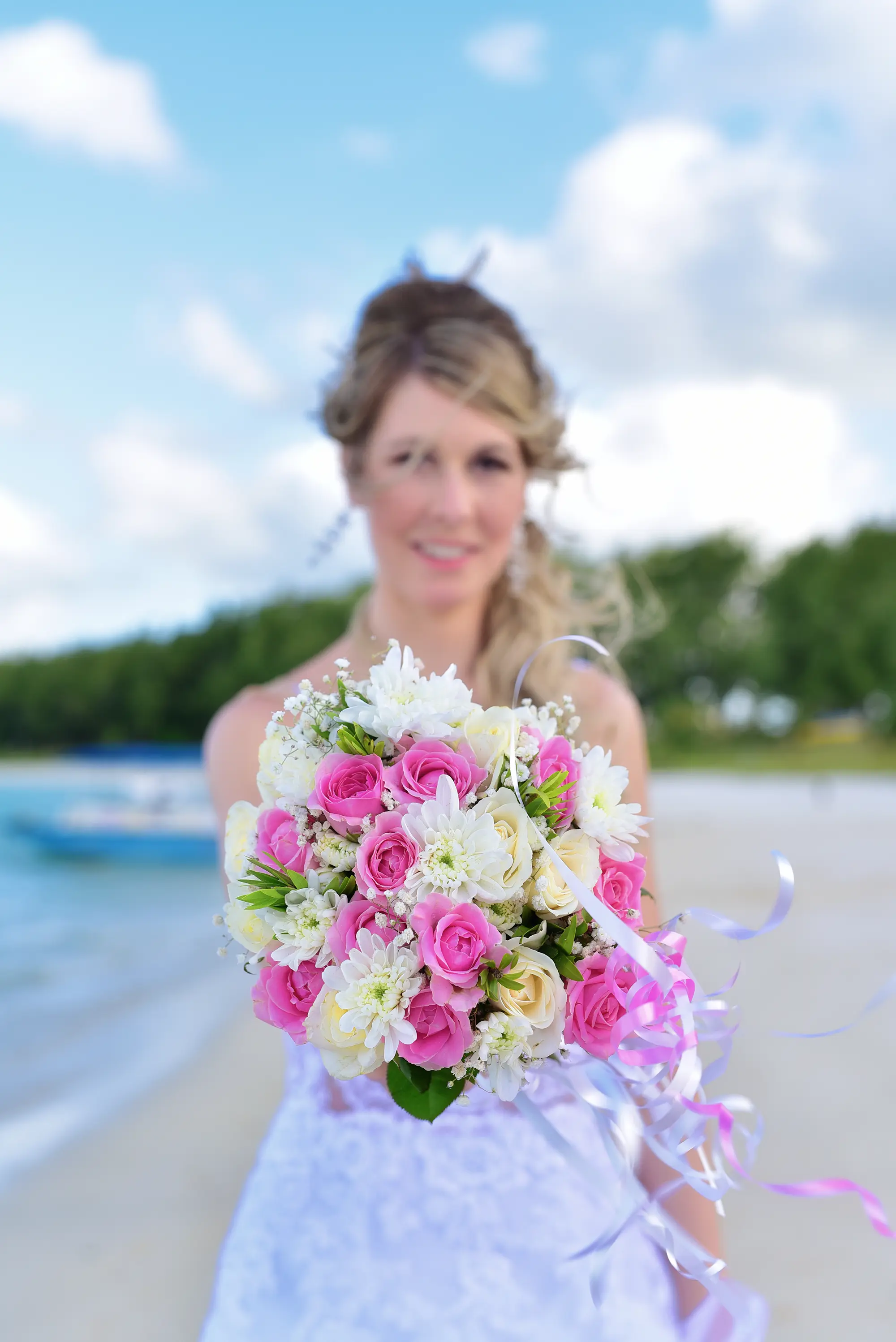
From the air, Belle Mare is one of the most visually structured beaches in the Indian Ocean. The colour bands that are visible from the shoreline become even more graphic from above — the white sand, the mint and turquoise shallows, the mid-lagoon blue, the dark teal at the reef edge and the deep navy of the open ocean beyond the barrier form a sequence of parallel horizontal bands that reads almost like a colour chart, except that no human has designed the transitions. They are formed entirely by water depth and coral composition.
Best Conditions for Drone Work
Morning is dramatically better than afternoon for drone photography at Belle Mare. Before 9am, two things are in your favour: the light is angled low enough to give dimension and shadow to the texture of the sand and the shallow reef structures, and the wind is at its lightest — the east coast trade winds typically build through the morning and peak in the early afternoon. An afternoon drone session at Belle Mare in peak season can be challenging, with 15–20 knot winds that reduce flight stability and cause significant image blur at slower shutter speeds.
The ideal drone altitude for the colour-band shot is 80–100 metres — high enough to compress the full sequence of colour transitions into a single wide frame, but below the 120-metre ceiling required by Mauritius Civil Aviation regulations. At this altitude, the transition from white sand through the successive shades of blue is captured in its full width, and any subjects on the beach or in the water appear as small figures that provide scale without dominating the frame.
The Reef Line and Ile aux Cerfs
At 80–100 metres altitude, the reef line becomes clearly visible as a dark, irregular stripe across the mid-to-far lagoon. On particularly calm mornings, the white foam of the waves breaking on the outer reef edge is visible even in flat conditions — a thin white line that separates the protected turquoise of the lagoon from the deeper blue-black of the open Indian Ocean. From the southern end of Belle Mare, Ile aux Cerfs is visible to the south-east on clear days — approximately 6 kilometres away over open water, its low green profile and the white sand of its beaches appearing as a pale shape above the horizon.
Permits and Restrictions
Drone flights at Belle Mare are subject to standard Mauritius Civil Aviation Authority rules: maximum altitude 120 metres, no flight within 50 metres of any person not involved in the shoot, and no flight within the controlled airspace of hotel properties without prior authorisation. I only fly where drone use is permitted. The public beach area is the most straightforward location; flights adjacent to hotel grounds require coordination with the hotel's security team, which I handle as part of my pre-shoot preparation.
Hotels on Belle Mare
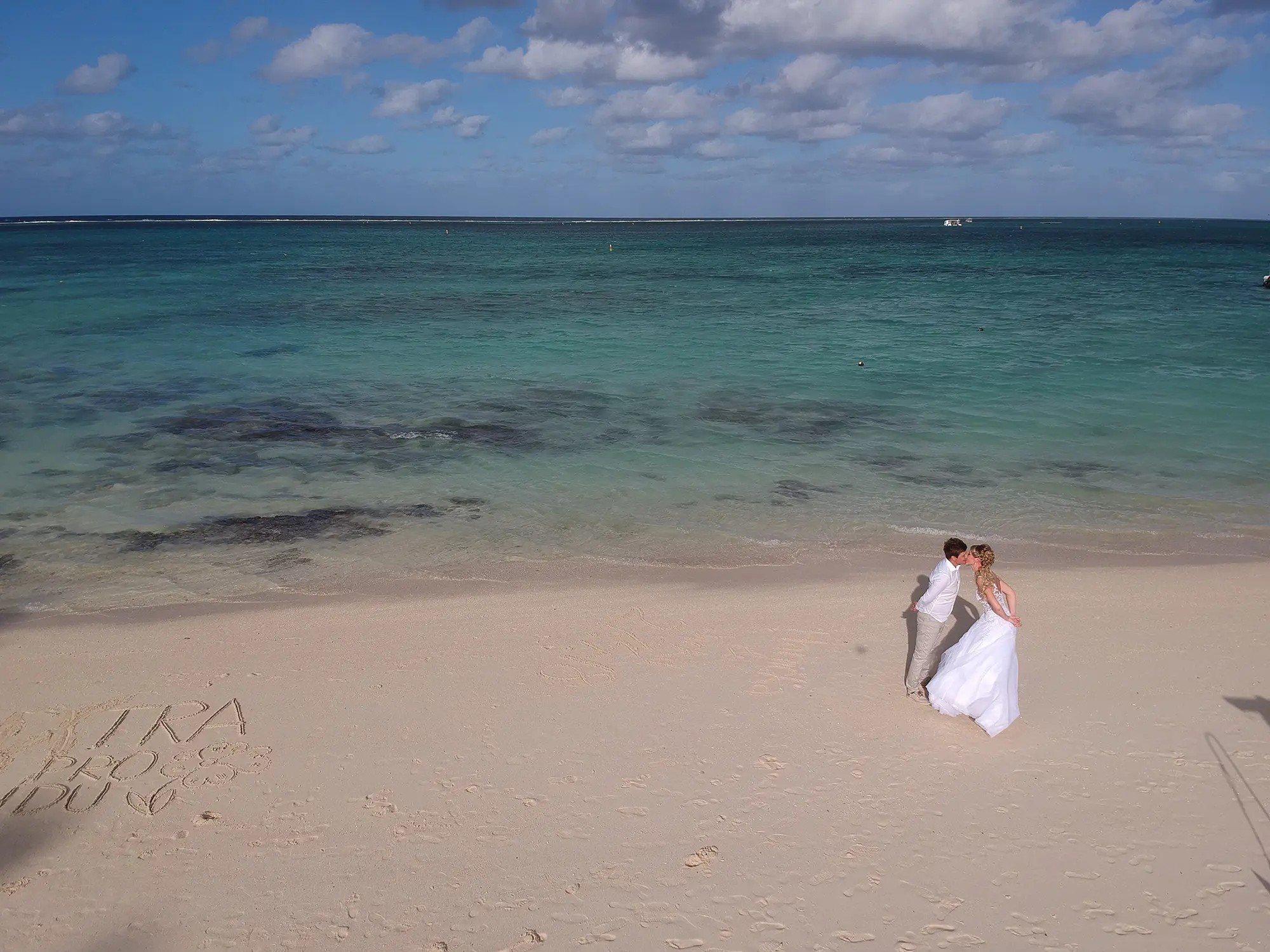
Three luxury hotels occupy stretches of Belle Mare beach, each with a distinct character and a different relationship to the beach itself. All three are properties I have worked at extensively for wedding, honeymoon and couple photography.
Constance Belle Mare Plage
Constance Belle Mare Plage occupies the most photographically spectacular stretch of the beach — the long, straight northern section where the sand is at its whitest and the casuarina tree line provides the most consistent natural backdrop. The hotel's grounds extend directly onto the beach with no barrier, and the resort architecture — low-rise, colonial-influenced, surrounded by mature tropical gardens — works beautifully as a secondary backdrop for portraits. Sunrise sessions from the Constance stretch produce the widest unobstructed eastern horizon views on the beach. The hotel has hosted hundreds of weddings and has a dedicated photography coordination team. See the Constance Belle Mare Plage photography gallery.
One&Only Le Saint Géran
One&Only Le Saint Géran occupies its own small peninsula at the northern end of the Belle Mare area, giving it a semi-private beach with water on three sides at high tide. The peninsula setting means the light at both sunrise and the late golden hour has a quality that is slightly different from the main beach — the water wraps around the grounds, and the light picks up reflections from multiple angles. The hotel is the most exclusive and private of the three, making it the natural choice for intimate honeymoon sessions and couples who prioritise seclusion. Its grounds include a long garden path lined with mature tropical planting that is one of the most versatile portrait settings I use on the east coast. See the One&Only Le Saint Géran photography gallery.
Shangri-La Le Touessrok
Shangri-La Le Touessrok is located at Trou d'Eau Douce, approximately 20 minutes south of Belle Mare beach proper, but its ownership of Ile aux Cerfs — the private island that sits in the lagoon just offshore — makes it one of the most distinctive photography locations in Mauritius. The hotel's beach faces west-northwest across the lagoon toward Ile aux Cerfs, which means afternoon golden-hour sessions here have the island as a backdrop rather than open ocean. The crossing to Ile aux Cerfs takes five minutes by hotel boat and the island's beaches are among the finest in Mauritius, with their own distinctive calm-water lagoon, private event spaces, and complete seclusion on booked event days. See the Shangri-La Le Touessrok photography gallery.
Getting There and Nearby
Belle Mare is well-connected by road and straightforward to reach from any part of the island. There is no public transport direct to the beach, so a hire car or taxi is the standard option for visitors not staying at one of the beach hotels.
By Car from the Major Centres
From Grand Baie on the north coast, the drive takes approximately 50 minutes via the B48 coastal road south through Roches Noires and then east to Belle Mare. The coastal route is scenic but slower than the inland motorway route; allow extra time in peak season (July–August) when traffic on the coast road can be heavy between 8am and 11am.
From Port Louis, the capital, Belle Mare is approximately 45 minutes via the M2 motorway south to Junction 11, then east on the A7 toward Mahébourg and north on the coastal road to Belle Mare. This is the fastest route from the west. From SSR International Airport, the drive is also approximately 45 minutes taking the A7 north to the east coast road.
Parking
The Belle Mare public beach park has a free car park with space for around 60 vehicles. At 5:30am for a sunrise session the car park is invariably empty. By 10am on weekends in peak season it can be full, though overflow parking on the road verge is universally tolerated. The public beach park facilities include changing rooms and basic amenities.
Nearby: Ile aux Cerfs
Ile aux Cerfs is accessible from Trou d'Eau Douce, approximately 20 minutes south of Belle Mare by car. Public boat transfers to the island depart from the jetty at Trou d'Eau Douce throughout the day from approximately 9am; day visitors can buy tickets at the jetty. For photography sessions on the island, Shangri-La Le Touessrok guests have priority access, but day visitor photography sessions can be arranged through my booking system. Ile aux Cerfs combines well with a Belle Mare sunrise session — arrive at Belle Mare at 5:30am for sunrise, drive south to Trou d'Eau Douce by 9am, and cross to Ile aux Cerfs for a mid-morning couple session in a completely different lagoon environment.
Belle Mare Beach, Mauritius — FAQ
Capture Your Mauritius Memories
Drone aerials. Golden-hour portraits. The turquoise lagoon as your backdrop. 15 years shooting Mauritius's most beautiful beaches.